Can We Stop the Next Pandemic Before It Starts?
ANGUS HERVEY
Hi, it's Gus, and I'm flying solo on the podcast this week because we're going to do something a little bit unusually topical for us. Often on this podcast, we try to take a step back from the news, But today we're going to be talking about something that has been making headlines in the past few months. Ebola.
And the people whose job it is to spot outbreaks before they become something much bigger.
Now, I don't like spending a lot of time thinking about global pandemics. I was in Melbourne during the COVID lockdowns in 2020 and 2021. We were the lockdown capital of the world. spent longer in lockdown than almost any other city, I think, except for Buenos Aires. So I've done enough of that for one lifetime.
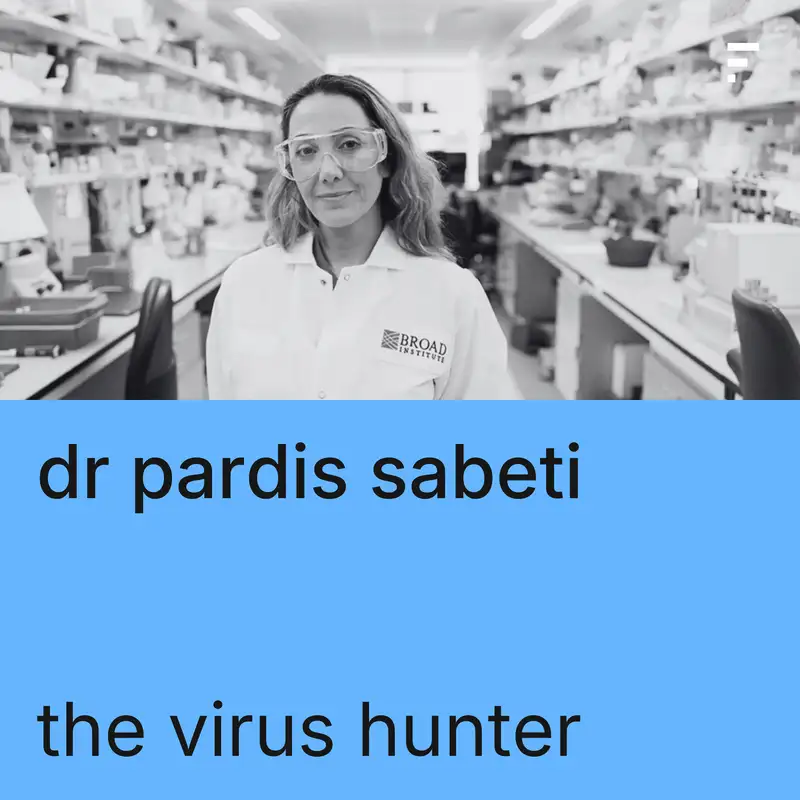
But my guest today, Padis Sabeti, thinks about this stuff, thinks about pandemics and outbreaks all of the time.
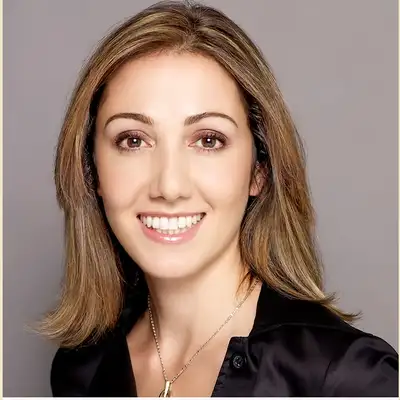
She is a geneticist, a computational biologist, and she's one of the people behind Sentinel, which is a disease surveillance system designed to give communities the tools to detect outbreaks early, before they get out of control, right where they begin. But it doesn't quite happen in the way that you might think.
This conversation isn't a sort of feel-good one. We're going to talk about Ebola, about what happens when surveillance systems fail, and we're going to talk about the collapse in global health funding and what it means for people trying to prevent the next outbreak. But before you kind of just switch off, I want to also tell you that I found this conversation strangely reassuring.
If there are things in the world, like pandemics, or anything else really that keeps you up at night, it's important to know that there are people like Pardis who are already awake, who are thinking about how to stop those things from happening. And I'd encourage you to dive into this with us. It's a fantastic conversation.
PARDIS SABETI
So let me set the stage for your audience that 2014 was in the heat of the ebola outbreak in west africa so basically in march of 2014 an outbreak was declared in guinea of ebola hadn't really been seen in west africa before and it was quite terrifying for a lot of people because by the time they picked up that this was ebola that was circulating this mystery disease it already reached large part of the country.
We were working in Sierra Leone at the time. My team at Harvard University and our colleagues at Tulane and partners in Nigeria and Sierra Leone were all working together on another virus called Lassa virus. It's another hemorrhagic fever virus that circulates in that part of the world. So we recognize in both of those countries that there is now a risk of Ebola circulating in the region.
And if it was to come to those countries, our hospitals would see cases. So we quickly set up diagnostic testing there. And the teams that we work with there on the ground were the first to detect it in Sierra Leone and in Nigeria. And in that process, we recognized that the more we set up testing, the more we identified cases. And we started to realize that this idea of an emerging disease, it's not exactly the right idea.
This isn't emerging diseases. These are just emergent detection of diseases that are circulating, right?
I think Donald Trump once said, if you don't test for COVID, you don't have it. And I think that's actually quite poignant. That's a true fact. If you don't test for something, you never see it. And as soon as you set up testing, you start seeing it. And that's basically what we were doing with these hospitals.
And we started picking up more and more cases. And to us, it became pretty evident that we're not testing for a lot of things, so we shouldn't be seeing them. And we don't usually find out that they're even there until the signal gets so dramatic that even somebody succumbing in a terrible way to a disease might not be enough.
It has to be many people succumbing over many months, over large regions until it attention, maybe gets analyzed in the right way and you find out what's going on.
ANGUS HERVEY
Ok. So you decide that this is a problem worth solving. I mean, where do you even start with something like that? Do you have to build something new? Do you plug into existing systems? What is the balance between those two things?
PARDIS SABETI
Well, I'll tell you how we started. I started small. We started with my Harvard startup funds and a call to Christian Happy, my colleague in Nigeria. I actually was a human geneticist mainly, although I always worked in infectious disease. And I developed an algorithm that could mine the human genome and identify signals of human adaptation.
You may have heard of a story about sickle cell anemia and how it became common because having one copy of that trait protects you from malaria. So it's a classic signal of like adaptation that we adapted to malaria by having the sickle cell trait start to emerge. And there's other ways where we changed in our environments.
We went to places with less sun and we got lighter skin and there's all sorts of forms of human adaptation. So I was studying that process of like traits that help humans survive. And when I was studying the human genome, the signal I found that was the strongest was a gene called LARGE that was critical for entry of Lassa virus. And it was under evolution in Nigeria where Lassa is found.
And so that made me be like, wait, what? What is this disease? Why have I never heard of it, even having gone to medical school? And why is it one of the major drivers of our evolution? So I set out to just ask a question. Does having this trait protect you from LASA? Not really knowing that much about the disease, but then when we set out and started working in Arua, Nigeria, we realized, oh, this disease is everywhere.
There's a ton of cases and it's not being detected because there's no diagnostics in the country. It wasn't like there was an alert that LASA was a problem. It was a weird signal I found in the human genome that made me be like, huh, could this disease be more important than I know anything about at least? And so over time, we started to study it more and more.
And we went to this rural hospital in Arun, Nigeria, and then also later partnering with other colleagues at the Kenema Government Hospital in Sierra Leone, rural hospitals that were dealing with lots of fever. And we came to them and we started to help them set up capacity to test more cases and identify what could be going on. And so that just really involved meeting the communities where they were at.
I've spent seven years helping the community just start developing infrastructure to test for LASA before I ever started any research questions, because we just had to get the foundations and the fundamentals there. But what we found was that the more we set up capabilities, the more cases we found.
And the more the communities got activated, the hospital used to be described as a cemetery because you would go there and they didn't have diagnosis and they didn't have good treatment. And so they were there to witness the ravage that the disease did to you without any solutions. But once you started set up diagnostic testing and got in early treatments, things transformed. And so we saw a transformation of the hospitals.
So we ended up writing a paper called Emerging Disease or Diagnosis? Like asking the question, is this emerging disease or emergent detection of diseases that are circulating?
And in that, we basically said, hey, if we actually helped local hospitals set up the capabilities to test for the things that are circulating in their regions, we would not only help those communities and those doctors on the front lines, we would create Sentinel sites for the whole world. And that was the premise. And so it is small. It's a small effort.
It starts really with local communities, empowering them with just the tools and technologies that are available to us, and then increasing them because there aren't diagnostics for most viruses that are circulating.
So we kept adding more and more diagnostics for more diseases that were impacting them and then using something called metagenomic sequencing to see if we could discover more viruses that are circulating in those regions and develop diagnostics for those.
And then, as you said, it builds out from there and you start working with the local communities, the local public health, all the way to the Nigeria CDC and the African CDC and the WHO. You start working with the partners at every level, but that was a slower process. It was really start with the local communities, start with the clinicians on the front line, meet them where they're at with the needs they had.And then from it grew a much bigger understanding of a problem.
ANGUS HERVEY
This kind of different view, I suppose, of disease response. You know, one is responding to the disease. One is setting up a surveillance network. So trying to get the signal before it happened. How much of your hunch was correct? And how much were you wrong about? You know, what ended up surprising you in that?
PARDIS SABETI
Honestly, nothing. I'm trying to think, actually. I'm trying to think. It was like, what did we not know? We actually knew everything. And that's the part where it's hard to explain because people are like, oh, how did you know COVID was coming? I'm like, because you're just in the field and it's obvious. When you start looking, you're like Lassa fever is everywhere. It's a matter of time.
This virus can be lethal, can be fatal. It's changing all the time. It's mutating. It's a matter of time before one strain gets away and kind of goes out of control. We wrote a paper in 2012 where we said Ebola is circulating. It's circulating all over that region of Africa, West and Central Africa. There's obvious evidence for it. You just have to look.
Also, when you're looking, you just see that, I mean, we predicted that COVID, we predicted viruses are spreading asymptomatically like long before because they just do. You just see it. That was one of the premises of this paper that we wrote, the Emerging Disease or Diagnosis paper was that you assume that every patient with Ebola is bleeding out of every orifice in this dramatic way that you see in Hollywood, right?
Because the only time anybody bothers to run an Ebola test is when that's happening, right? So you get what you look for. If you only look for Ebola and patients that look like that, you will only see Ebola and patients that look like that. And so we said, if you looked at more people, you would see that actually a lot of other people are walking around with Ebola and you wouldn't know it.
And that's basically what the paper said. We said, They glass it, take Ebola. And at that point, we were like studying one, but also like more and more studying the other. If you look at it, there are lots of cases that are not being diagnosed and they are circulating. I said it's been circulating for millennia and it's probably circulating pretty widely. So none of it was actually a surprise.
And that's the frustrating part because we see all of that and we know exactly what needs to be done. And we see that another outbreak is coming. A major pandemic is coming because it's obvious because we're in an environment in which these viruses are having more and more opportunities to transmit from human to human than ever in history. We are reducing our surveillance and our countermeasure capacity.
And we're increasing in a world where so much of this is about how we work. I just connected with somebody named Jocelyn Ackerman at University of Michigan that's telling me fascinating things about how humans engage when they're sick and they're not telling each other when they're sick. We have less trust in each other. So we're also going to be walking around hiding our infections from each other.
And so it's just a matter of time. Nothing is really truly a surprise. And we really need to start working now to deal with that better, because otherwise we're only going to decide that we need to work on it again when we're in the middle of another pandemic. And this time, it won't be one that half the population can write off, right?
It will be one that we will all have to contend with because it could be fatal to major swaths of the population.
ANGUS HERVEY
All right. So you're like, right, we have this problem. We can see it. We're going to try to do something about it. So in 2020, you launched Sentinel through the Audacious Project. The timing of this was amazing. The fact that you launched it in February before anyone had heard of COVID. Take us up from that moment, 2020, up to the current day. What does Sentinel look like in 2026?
PARDIS SABETI
Yeah, so what's interesting about it is that Christian and I did a lot of this work early on with our own kind of startup from Harvard. Just little grants that I got, investigator grants, like wonderful ones, but smaller ones. And then the first time we got like significant funding to, on this premise of an early warning system for pandemics was actually launched in March of 2014.
We had the thing in early March and late March, we were like setting up the diagnostics for Ebola and we were in it. And then we got up the audacious prize. We submitted the application December, 2019 got it in February, 2020 and then March we were in the pandemic. And so I was pretty, I was like, I was like, well, yeah, And now we got this MacArthur prize.
And I'm glad to say that, like, you know, although I do feel like I'm in a pandemic, I feel like there is something brewing and we don't know yet, but it's going to sideline us. So, yeah. So it is a little bit of like, watch out if we ever get a grant, we might be in trouble. The other way I'd describe it is you can't always get what you want, but sometimes you get what you need.
We wanted that grant well before outbreaks happened. We needed it then. So we're grateful that we had it. But essentially Sentinel is forged through about two decades of work together with Christian Happy and I, partnering on Lassa fever and malaria before that. The simple premise is detect, connect, empower.
You need to detect pathogens wherever they occur, either characterizing them in genome centers or testing a broad set of potential pathogens, bugs in hospitals or at-home testing for things that are circulating threats.
And also getting just everybody on their phone saying, I see a cluster of symptoms or I have these symptoms and using that information to get them what they need, then you need to connect all that because of the communicable nature of infectious diseases. That is, it spreads between person to person. It spreads from village to village. You have to connect that data for it to be meaningful, right?
Finding out that three people that went to this party each go somewhere and find out they have a disease or one of them does and the other ones don't. It doesn't get you anywhere, but once you see, oh, there's a cluster happening here, that's where you start to really understand how you get that intelligence that's going to help you respond quickly and then find more cases before things escalate.
So you need to detect, you need to connect that information in real time and get people to be able to analyze that data, share it with the world, get things out there.
And then finally, you need a power of reactor in the system, like the idea that there's something I often say, which is that unlike other existential threats to humanity, where you can tell people like you should vote in America, but unless you live in a swing state, you can't really convince them it matters. But pathogens have what we call exponential spread, right? So one case can lead to two to four to eight.
And so because of that idea of exponential spread, a single person can launch a pandemic. And that means every person can stop it. Every person truly matters. There's no way around it. One person missed, we're in a world of danger.
And so within that context, we really think we have to empower every actor in the system to get the information that they need and to do the work that they need to stop the pandemic because so much of what we do is built around education.
So basically for to these two decades of working and these grants that have helped us move along, we're really grateful to the NIH and to the World Bank for starting us on this path with big major investments and then the Audacious Project for pushing the Sentinel program and a number of other amazing funders who are making this possible. We're able to keep on that path.
ANGUS HERVEY
All right. This has worked, I think Sentinel played a fairly large role in reducing the impact of the Marburg outbreak in Rwanda. Tell us a little bit about that. Why did it work? What went right?
PARDIS SABETI
Well, I think the biggest thing that went right is that we were there at the service of Rwanda. That's the thing that we always do. People sort of ask, how do you work well in countries? I'm like, we just ask them, what do you need from us? That's how we work. We never try to come in and say, we've got this, but that's not what we do. We identify and find the terrific people in country who are leading the charge.
And we just provide them with resources to do what they're doing as best as they can. So Christian's team in Nigeria are the ones that roll out to the different sites and work with them. We also go there, but their team is the real leader in that. They went on ground.
They supported the sequencing efforts of the country, helped them establish reporting and identify what was going on, and just work closely with them to help them think about how to stop the outbreak, how to identify cases, to how to understand transmission.
And what was really great about that is that they stopped transmission quickly and they got a very low fatality rate because they were able to identify cases quickly and stop them from spreading to other people.
ANGUS HERVEY
The current outbreak in the DRC is now the fastest growing outbreak ever for Ebola and is very close to becoming the second largest outbreak. And I think the UN and the WHO is warning that if it continues at this pace, it's going to become the largest. So what went wrong? How does it go right in somewhere like Rwanda? But here, we look like we've got a real problem on our hands.
PARDIS SABETI
It's honestly a perfect storm. In regions where there's conflict, there's a dual problem, which is that conflict creates all of the circumstances that will lead an outbreak to escalate. Displaced populations, poor sanitation, lots of chaos, the decay in healthcare systems. All of that is what's going to be more likely to cause an outbreak to happen. but then also more likely to cause an outbreak to go undetected.
And so as the world seems to be increasingly moving to the constant drum of conflicts, we're really going to have to come to terms with that, of how to build systems to weather those conflicts and not allow outbreaks to escalate.
So probably the biggest reason why we're in the circumstance we are in is the conflicts in the DRC and the lack of health infrastructure around that and the lack of safety of health workers to operate that have given us such poor visibility that it took a long time for the outbreak to even be detected.
And it's very, very hard for the outbreak to be responded to and for health workers to perform the duties they need to perform. But in addition to that, there was the loss of a lot of global health funding, the removal of a lot of peacekeepers on the ground, the continual difficulties in funding science and the funding vaccine work. So it is a real perfect storm.
And it's hard to see the way out without real international cooperation, which is not great right now.
ANGUS HERVEY
Okay, at this point, I think it's worth explaining what Sentinel actually is. The basic idea is pretty simple.
Instead of waiting for samples to travel hundreds or thousands of kilometers to a central laboratory and then waiting days or weeks for an answer, Sentinel is trying to put the tools to detect disease much closer to the people who actually need them.
In other words, you find the outbreak where it starts when there's still time to do something about it. And underneath that story is another one that I don't think I was expecting because you can build the technology and you can train the people and you can create these amazing systems for finding dangerous diseases before they spread. But then you have to keep the whole thing running.
And as Pardis explains, sometimes the thing that threatens to undo all of that work isn't the virus, it's the money. Intuitively, I think people understand, you know, it's very, very difficult to provide health services or provide any kind of service in a zone of conflict. That makes sense. I think what maybe is less obvious is the slashing of foreign aid and global health cuts that started about 18 months ago.
And we're really now starting to see that come through. What does that actually look like on the ground? Who suddenly disappeared from your network?
PARDIS SABETI
So much disappeared from the network. A lot of frontline testing, health workers, peacekeepers, like all of those things. I had colleagues on the ground who basically worked in DRC very successfully for many, many years, who now there were kidnappings, there are greater risks. Essentially, there was a sense that there's now no international force to protect the region.
And so you had a lot more gangs and warfare and terrorist acts that were happening all around. And so a lot of people lost the funding to work. And then a lot of people who had funding to work could just no longer viable work there. So it was literally no surprise that this happened because of the number of people that I knew that either were withdrawn or had to withdraw based on what was going on.
ANGUS HERVEY
All right. When you strip this funding away, what is there in DRC right now? What does the response actually look like on the ground?
PARDIS SABETI
I mean, I like to be honest with what I know and what I don't know. I don't have the best sense of it. I'm not in the WHO, so I don't have visibility to anything outside of our own group. And I get the information that you all get for the most part. So I can tell you what our own team has. Like our own team has been sending people to the front lines kind of in of rotation supporting the teams on the ground.
But there's a lot of challenges and restrictions that are more difficult than before. And usually like our teams in Nigeria wouldn't think twice from going on the ground and our teams from the U.S. would be able to join. There's a lot more friction to every part of that. So we are there, we're on the ground, but there's a lot more components that make that difficult.
You had said actually, oh, it's something that's in the news and everyone knows it's in the news. I'm like, is it really? That's the last time Ebola was on the front page. There's so much other news. It's not really being followed that closely. And there's a lot we don't know about how the outbreak is going.
ANGUS HERVEY
Obviously, this Ebola outbreak is really serious. But I guess the thing that keeps you up at night is a serious global pandemic, or another one on the scale of COVID, but one, as you say, that may have a very different kind of profile. I'm curious about what the slashing of global health funding has meant for you more broadly for the Sentinel network?
PARDIS SABETI
When they happened, we had gotten this big prize from Audacious and it was a five-year project. TED works for this really closely and carefully and really helps us support sustainable funding for the longer term, right? So that it doesn't kind of all go out. At that point, we had secured a lot of broad, diverse portfolio funding that would allow us to continue when Audacious completed.
But then when the funding cuts came and not only were there a lot of cuts to current funding, but there was like a lot of things that were on the horizon that got withdrawn. So there's no more funding. We suddenly found ourselves in this really difficult predicament where we were on the side of a cliff and there was kind of no way out. And everybody was paralyzed and trying to figure out what was going on.
So there wasn't a lot of movement. And in the midst of that, I had probably one of the hardest kind of personal things in the lab where we hit a point where there was no funding and there was no cuts I could make or things I could do to get there. So I had to lay off a third of my own team. And it was really hard because I was going to all these other agencies and being like, please help us.
And they're like, no, no, we just laid off 80% of our team. When everyone you go to ask for help has already cut most of their team, there's nothing to ask. And so we had this really difficult place and I had to let go a lot of beloved colleagues. And what I told each of them was, I don't want you to think that the training and the background you got is not a value.
It is of great value, even though right now we don't have the funding for it. And then sadly, you're in a growth industry that right now we're breeding pandemics all around. At some point, it'll all come to roost and you'll have to go back in action. So maybe even take a break right now and refresh yourself because you will have a job before you know it.
And then I came back to the rest of the team and I said, let's get all of our papers out. Let's get all of our works accomplished because we don't know what tomorrow is going to bring. So let's live every day like it's our last professionally. We wrapped up a lot of work and we got it out. And I wasn't sure. We were finalists for this MacArthur 100 and Change Prize where there was over 860 applications for this thing.
There's one winner. We were one of five finalists, but we were up against unbelievable talented organizations and really didn't think we were going to get it. So it was like a shot in the dark, but they gave us some hope, but it was really a 20% chance and we felt less. And then suddenly, several months later, we get the prize and our fortunes completely change. And so we're back in it and we are able to do things.
I definitely, when I went into the meeting, it was called a status update on our application. I went into that status update, assuming that that was the reason it had that kind of a name and all of that was that they were going to say thank you, but no thank you. So I had prepared a concession speech, which funny enough, like Christian Happy, my colleague, was much more optimistic.
And he was like, I'll do the acceptance speech. And then the funny story there was that he got so verklempt that he froze. And then I ended up going into my concession speech. And so I, but it was, it was, it was apt because it basically was like, I know what it's like to have uncertainty and to be a finalist and not get it. Cause I've, I've living like that.
I was given an unbelievable karmic gift and I have a karmic debt to pay off because we recognize there's a lot of people out there that'll be like, why you, you know? And I'm like, I don't know why me. And so we got to make sure that we make it clear that it's good for everybody if we get this. And how do we do that?
ANGUS HERVEY
Just like a weird version of like sort of philanthropic survivor's guilt. I've never really heard this before, but it's really interesting. All right, very quickly, just for our audience, what was the size of that grant? Why has that changed your fortune so dramatically?
PARDIS SABETI
Well, it was $100 million to change something meaningful in the world. Obviously, the largest grant I will get in my lifetime, and to come then when I was seeing the whole thing crumbling was more than my brain could handle. I was depressed for a while after that. So that's the weird thing, which is like, They're like, how'd you celebrate? I'm like, it was no celebration.
I was like, if some people talk about having FOMO, I have FUMO, like fear of others missing out, right? Like I definitely, if I didn't, yeah, I'm okay. But like, that's the thing is I don't want others missing out. And I also know that a hundred million dollars is a lot, but it's, we're working in five countries.
It's not enough to, you know, when you actually look at what you're trying to do, it's not going to replace all of the public health system, right? So you have to think about how do you make things better? So all of that to say, things are changing.
I do think that the administration has, to its credit, recognized that we've got a problem, that there's a lot of intelligence that tells us that bioweapons are a risk, that biosecurity is a risk. And it's not clear yet what will happen, but we're seeing a lot of things moving that suggests that grants will start coming. I'm hoping that that's the case, and I'm grateful.
And I've been having really good conversations with a lot of different departments in the United States around biosecurity, and there's a lot of movement there. So I do think that growth industry may, God willing, may actually recognize the problem before it's out of control.
ANGUS HERVEY
Can you explain to us what is now possible? What does Sentinel look like now that you've got enough to tide you over until things potentially change and there's a shift in actually money getting out the door from the administration or whoever the next administration is? For us,
PARDIS SABETI
The question we, of course, always got asked by the committees, various committees that were reviewing us is what is the point of this money if it never will solve the problem? You know, this is a multi-billion dollar, trillion dollar problem. How could this make a difference? And that's the big thing we work on.
Everything we do is around reducing the cost because we recognize that while we believe that governments should put billions of dollars towards biosecurity and infectious disease, they may never do that. And so the way that you can make the costs manageable is by reducing the cost of everything in the system, by using information intelligently.
So the right people for the right things instead of hundreds of millions of tests of healthy people, right? You get cheaper with your testing. You get smarter about who you test. So you do it better. You reduce costs, but then you also reduce time. And how do you reduce time? You make it so that the data systems work faster. The intelligence gets out there quicker.
Outbreaks get stopped before they exponentially escalate out of control. And everything we're doing right now is around reducing cost and time for outbreak response. And we think that will make it manageable and able to being ingested in federal government funding across the world so that they can do that. One of the things we really, it's important to us is we are truly wanting to be collaborative.
We don't want to turn anybody down as a partner. We want to find ways of helping them however we can with the bandwidth we have, but we really do want to support broad good work in this space. At the same time, we've got this biosecurity risk that's kind of escalating out of control where I think bioweapons are going to be a thing. And I think that we are going to see agricultural attacks. We're going to see human attacks.
We have definitely moved to a new form of warfare where it's no holds bar and anything goes. We have to be ready for that. So yeah, I think we're at a good steady clip, but we're fighting a rising tide. And so we have to just be more deliberate, more careful at every aspect of this.
ANGUS HERVEY
All right. What needs to be true by 2030 for Sentinel to still be the answer to this problem that you're trying to solve?
PARDIS SABETI
Well, I think we have to build tools that meaningfully change the response time and transfer that technology into the hands of more people. So that's really what we're working at. It's really building high-quality tech principles that supports the frontline worker and responder, get it in their hands, understand where they're coming from, make sure it works.
The big thing we also need to do is just change the culture of outbreak response. It doesn't matter what kinds of technologies we create if we don't create a community working together, stopping outbreaks.
I think one of the great tragedies of the lab leak theory and all of that is that I'm not going to weigh in on whether or not I have my opinions, but I think publicly it's just not worth it at this point to weigh in on do I think it was natural or leaked or anything like that. What I can tell you is pretty obvious nobody wanted it to be leaked if it was. In the worst case scenario, it was a mistake that got out of control.
But the way we treated it as if we were going to interrogate everybody to the ground and destroy everyone and call everyone from China awful is that we are in a scenario now where, whether we believe it's created or not, we have moved from a place where a bioweapon was impossible to possible to plausible to probable, right? We're now in a world where that actually can be done. Whether they did it or not is a big question.
But could they have done it? For sure. Any of us could. Even a high school student in a random village could do it. That's the thing. So why are we vilifying each other and fighting with each other when we know that we all have those capabilities? Isn't that a point where diplomacy becomes the number one thing we have to do? And shouldn't we have immediately been like, hey, let's do truth and reconciliation. It doesn't matter.
Who cares? You know what I mean? Let's come back to a place where we all work. Because I think that at the end of the day, we're all humans on a planet and there's nothing short of an alien invasion that would bring humans together than a deadly virus that can of us.
So if we care about the human race and the future of it, then we should stop the nonsense and stop the kind of escalation of tensions and just figure out how to work together.
ANGUS HERVEY
Look, my personal hope is that it doesn't require a global pandemic for human beings to start cooperating with each other again. But I also understand that you're talking about here as a very real possibility and that you and many, many other people are trying to work on a response that heads this off at the pass or at least gets it early enough that we can do something about it.
That gives me some kind of assurance, but obviously there are so many question marks around this. I mean, you've been doing this now for your whole career, essentially, but certainly Sentinel, you know, Sentinel in its current form sounds like it's existed for 10, 15 years. Do you still want to be doing this in 10 or 15 years? Like, is this a problem that will ever be solved?
PARDIS SABETI
Yeah. So, I mean, I actually during COVID almost stepped out because I'm actually by nature curious and I have three other research projects that are not anything like this that I'm interested in. So I started in human genetics. I did a lot of other anthropology. I went to medical school. I have a whole cognitive science arm of my lab. I'm not an infectious disease researcher.
I think I'm a student of humanity and I just like using science and technology to better humanity. And during COVID, I was like, oh, okay. Like everybody else has come in. The field has got it. Everyone my entire early career as in human genetics. But once the Human Genome Project got finished, and the HAPS-LIT-type map, a lot of it turned into more just like, where of course, just the spigot had been turned on.
There's a lot of gold to be mined, but I was like, you know what? Somebody else can mine that gold. Let me go find a new patch. And that's kind of how I live and I exist. It's like, gold is being mined. I'll go find a new patch. And so I thought that that had happened, but then I saw the dysfunction of how we were relating to each other, responding.
And so I decided, no, I probably need to spend some more time here and figure out this piece. But no, I'm always thinking about succession planning in my mind because I'm always looking for my next big thing.
And we have an incredible team. That's why actually part of why empowerment is so important to me is that I want to build the next generation of leaders that do this and I don't need to do it.
But I will stay in it until as long as the problem needs something I can give. And then I have these other side quests that are coming. But most of them all like using science to better humanity by thinking about why are we doing what we're doing.
ANGUS HERVEY
I love that answer. That is a pretty good place to end it, I think. Is there a question that you wish I'd asked
that I didn't ask?
PARDIS SABETI
I mean, we could go on, but I think I'll give your viewers a break and know when my contribution has come to a close. This is a good enough time for that.
ANGUS HERVEY
No, that's great. Padis, thank you so much. We really appreciate everything that you're doing. We'll be keeping tabs. Hopefully, we will not see you in the news for all of the wrong reasons.
PARDIS SABETI
Yeah, that's right. My greatest success is if you never happened to hear from me.
ANGUS HERVEY
Okay, so there's something that Padis said towards the end of this conversation that has kind of just stuck with me. Her instinct as a scientist is to move on once the gold has been mined from a problem. You find the thing, you learn what you can, and then you go looking for whatever's on the next frontier. But I think what's so interesting in her case was the nature of this particular problem.
There are things that we have to keep on working on, even when that problem isn't entirely solvable. And disease surveillance is one of them. You can't just build the system and then declare victory and go home. You have to keep watching. You have to keep adapting. You have to keep on passing on the work. And there are so many other problems like that. It reminds me of something the conservationist Chris Tompkins once told us.
If you're only thinking about what you can accomplish within your own lifetime, you're probably not thinking big enough. So maybe there's a version of that here too. Some of the most important work in the world isn't work you get to finish. It's work that makes you and us stronger for whatever comes next and whoever comes next.
Creators and Guests